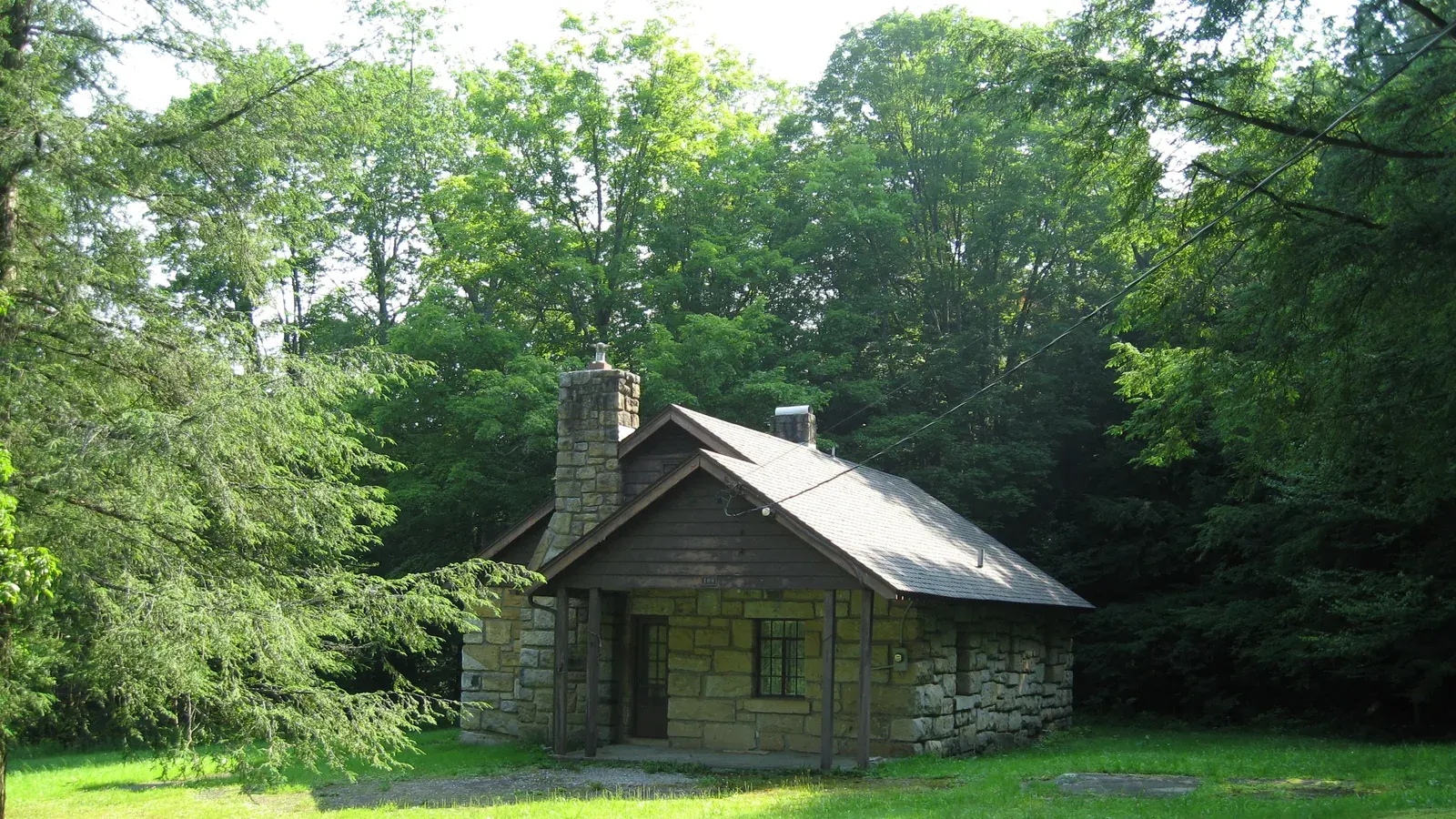
Elevated cabins occupy a middle ground between a conventional ground-level cabin and a true tree-supported treehouse. Built on stilts, pilings, or a raised foundation, they offer a similar sense of being lifted above the landscape — a view over a slope, a creek, or a forest floor — while relying on independent structural support rather than living trees. For many travelers, this distinction matters less than the experience itself, but understanding it helps set accurate expectations about size, amenities, and access. This guide covers how elevated cabins are typically built, what to expect, and how they compare to treehouse stays.
Why Cabins Are Built Elevated
Raising a cabin off the ground is often a practical decision as much as an aesthetic one. Common reasons include:
- Sloped or uneven terrain: Elevated foundations allow construction on hillsides or rocky ground where a conventional slab foundation would be impractical.
- Flood or moisture management: In low-lying or riverside areas, raising a structure reduces exposure to seasonal flooding and ground moisture.
- Views and privacy: Height alone can transform a modest lot into a property with an unobstructed forest or valley view.
- Reduced site disruption: Pier-and-post foundations disturb less ground than a full slab, which some builders favor in ecologically sensitive forest settings.
How This Differs From a Treehouse
The key structural difference is support: a treehouse relies at least partly on a living tree to bear structural load, while an elevated cabin sits on posts, piers, or stilts anchored into the ground, independent of any tree. In practice, this often means elevated cabins can be larger, better insulated, and more consistently available across all four seasons, since they aren't constrained by a single tree's growth patterns or health. Travelers who want the visual and atmospheric appeal of an elevated stay, with more consistent amenities and space, often find elevated cabins a good middle option between a treehouse and a standard ground-level cabin.
What to Expect On-Site
- Size: Elevated cabins tend to run larger than treehouses on average, sometimes including multiple bedrooms, full kitchens, and larger common living spaces.
- Decking and outdoor space: A wraparound or covered deck is common, taking advantage of the elevated view and providing usable outdoor space that a ground-level cabin might not offer as dramatically.
- Access: Typically a straightforward staircase, sometimes with a ramp option; suspension bridges are less common than with tree-supported treehouses.
- Climate control: Because they're independent of tree growth constraints, many elevated cabins are built with full insulation and heating/cooling, making them more viable for year-round or off-season travel.
Seasonal Notes
Elevated cabins are generally more usable across all seasons than treehouses, but the experience still shifts with the calendar:
- Spring and autumn: Widely considered ideal seasons, with mild temperatures and, in autumn, notable foliage views from an elevated vantage point.
- Summer: Full canopy cover nearby can help moderate temperatures, though direct sun exposure on some elevated decks can be intense at midday.
- Winter: Because many elevated cabins are built for year-round use, winter can offer a quieter, often more affordable travel window — though it's still worth confirming heating capacity and road access in snow-prone regions.
An elevated cabin can offer nearly the same sense of height and immersion as a treehouse, with the practical benefit of not depending on a single tree's structural health — worth considering if flexibility and space are priorities.
Safety and Structural Considerations
As with any elevated structure, it's reasonable to ask a property about its foundation type, inspection history, and railing/guardrail standards, particularly if traveling with children. Weather resilience also matters: wind exposure increases with height, and properties in regions prone to high winds or severe storms should be able to describe their structure's rating or any storm protocols. None of this is unusual to ask about — it reflects the same due diligence worth applying to any elevated or unconventional lodging.
Choosing Between an Elevated Cabin and a Treehouse
Neither format is objectively better; the right choice depends on priorities:
- If maximum immersion in a living tree canopy is the goal, a true tree-supported treehouse is usually the closer match.
- If space, year-round availability, and more consistent amenities matter more, an elevated cabin often fits better.
- If traveling with a larger group or family, elevated cabins more commonly offer multi-room layouts.
- If mobility or access is a concern, elevated cabins more often have simpler staircase-only access without rope bridges.
How This Guide Was Put Together
This overview reflects general research into raised and stilt-foundation cabin construction and how such properties are typically marketed and operated in the United States. It is intended as educational background, not a review of any specific property, and does not guarantee availability, structural condition, or amenities at any individual location. Always confirm current details directly with the property before booking.